Property & document management
Automatically analyses contracts and documents, processes paperwork via OCR and classifies content in a structured way.
Relevant information can be found and processed faster.

Property management, valuations, marketing, lettings and tenant communication — structured, efficient and with full document control.
Use case 01
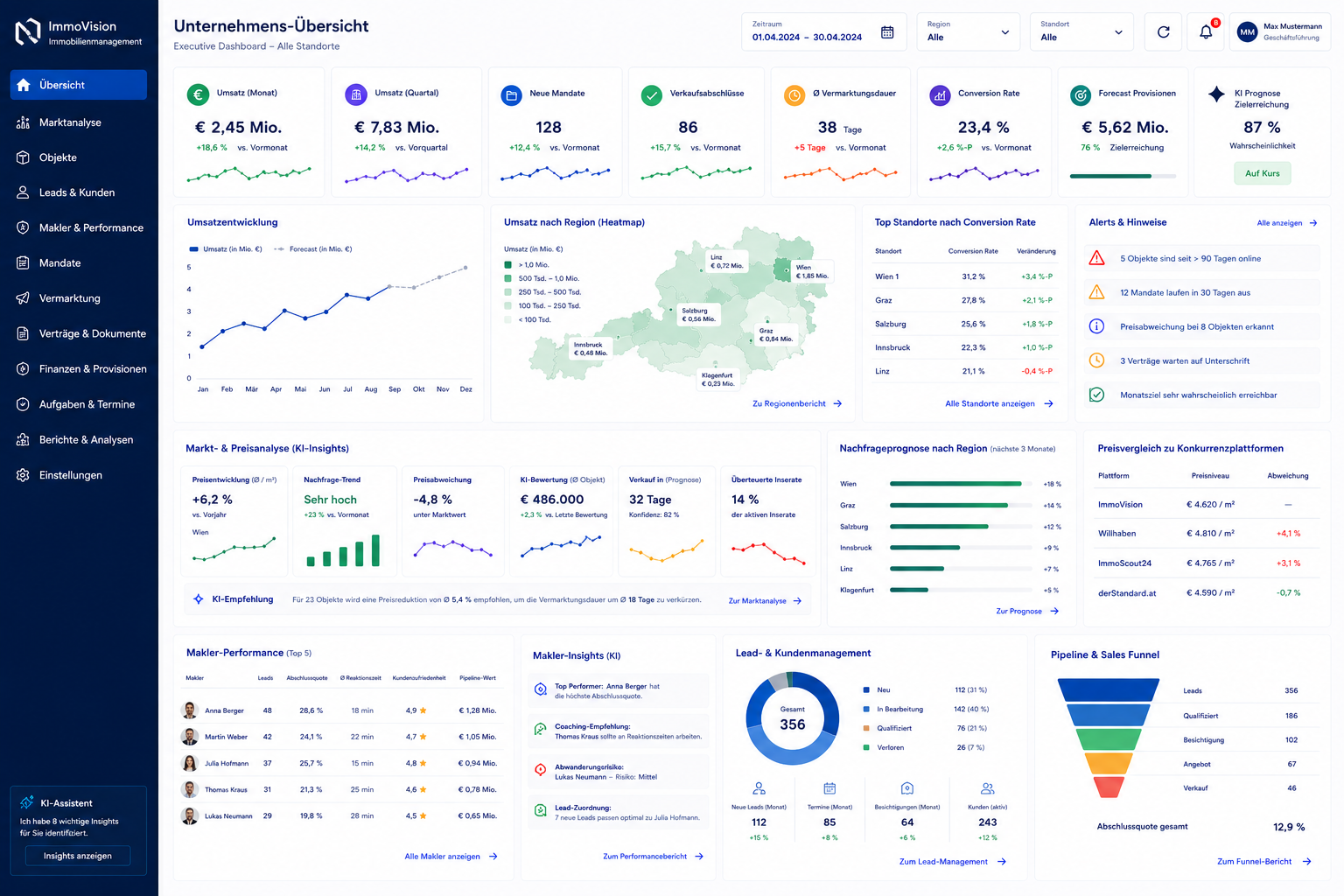
Property portfolio, leasing status, operations and maintenance data, forecasts and compliance KPIs — condensed in one interface, always up to date.
The AI real estate dashboard condenses operational and strategic KPIs from property management, leasing, facility, finance and compliance into one interface. Occupancy, vacancies, maintenance needs and early-warning indicators are surfaced automatically — without manual reporting work.
Management, asset and property managers see at any time where the portfolio stands — and can intervene exactly where needed.
How it works
We connect management, ERP, CRM and building technology systems and other data sources — securely, locally and without data leaving your company.
KPIs, reports and early-warning rules are tailored to your portfolio and reporting obligations.
We support and optimise continuously — the dashboard grows with your processes and requirements.
Use case 02
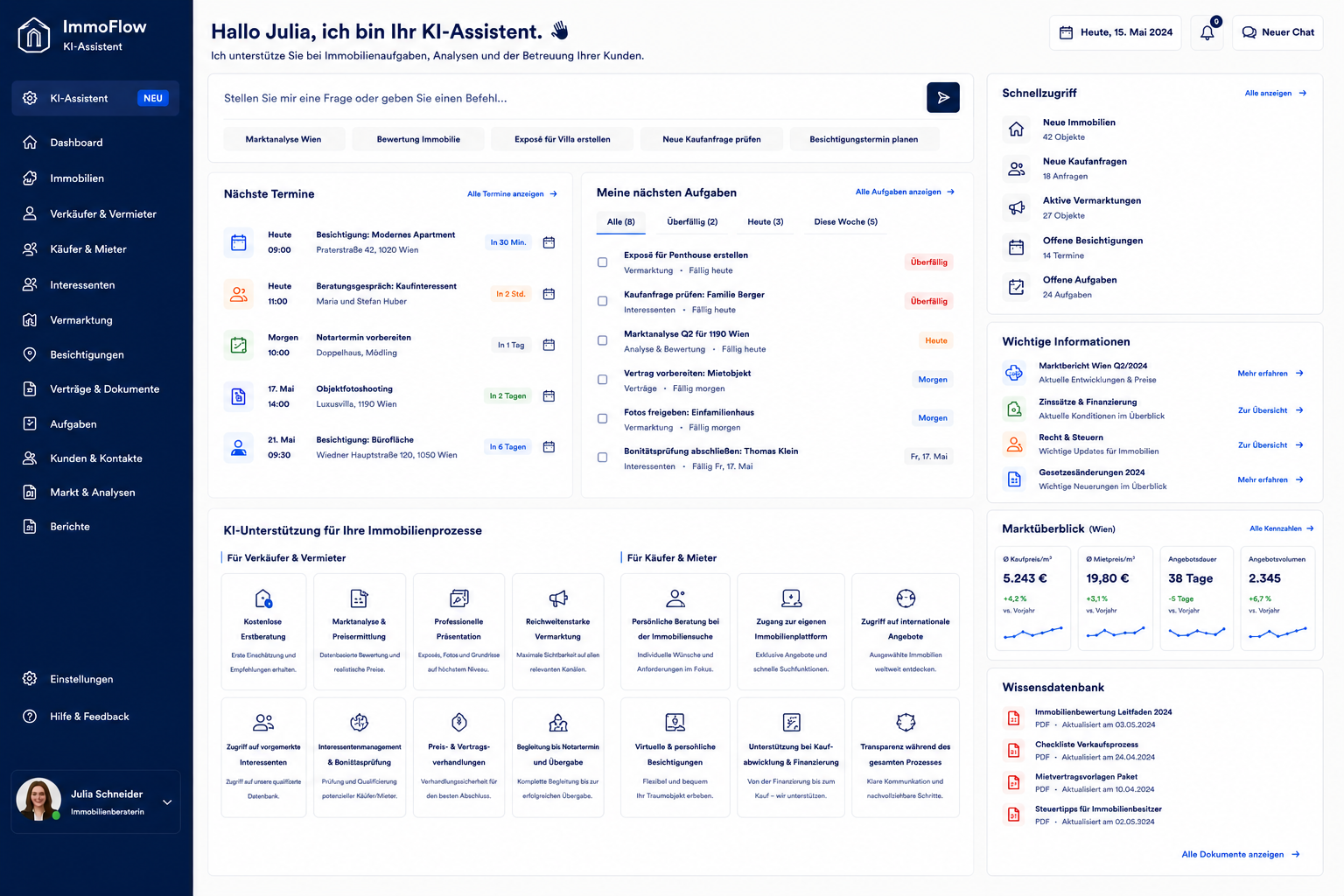
A direct contact point for properties, tenants, contracts and operations — based on your own data, files and processes.
The AI assistant answers concrete questions about properties, leases, operating costs, maintenance history or legal topics — context-aware and traceable, based on your internal data, contracts and files.
Property, asset and facility management save time on research, inquiries and preparing analyses. Complex questions are answered in natural language — with references to the underlying documents.
Use case 03
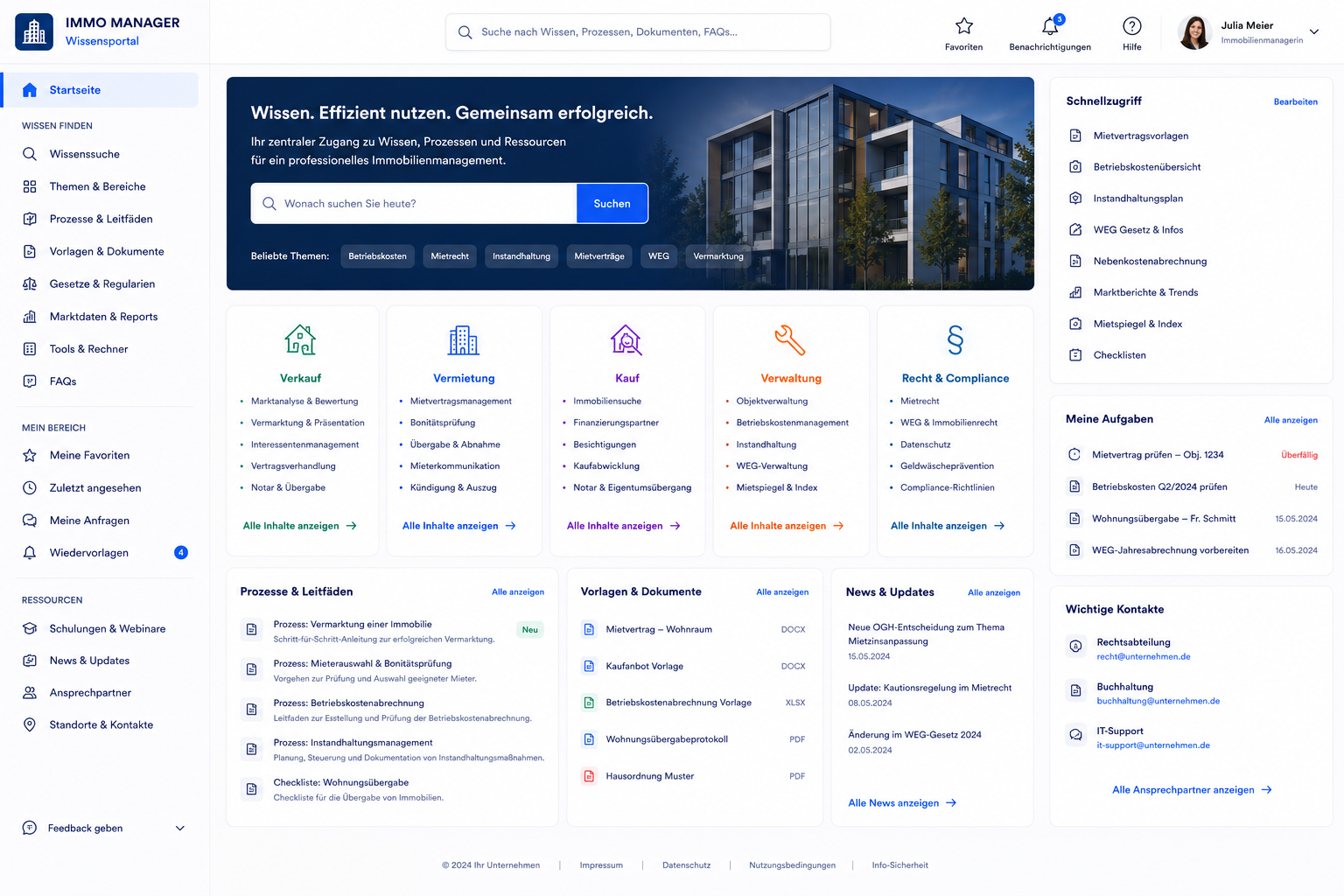
Leases, property files, valuations, guidelines and experience — accessible through a single question.
The knowledge management platform provides an intelligent, central access point to all real estate-relevant documents: leases, property files, valuations, construction documents, guidelines, internal instructions and experience from past projects.
Research times drop to minutes, new employees are productive faster, and senior know-how is preserved when people leave. Knowledge becomes a shared tool for all management and asset teams.
Use case 04
Ten areas where AI agents relieve management, leasing, operations, valuation and compliance and accelerate processes.
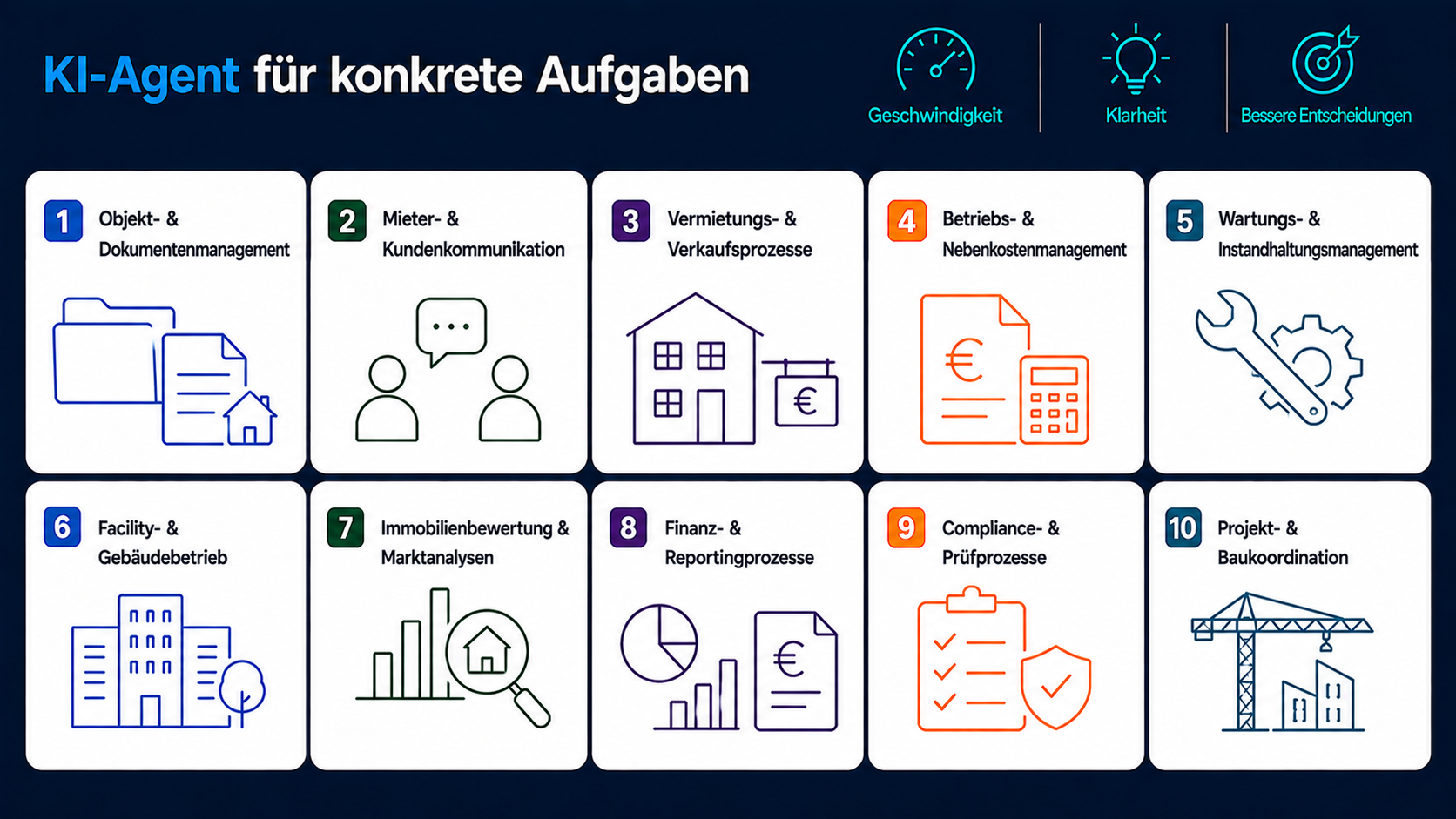
Automatically analyses contracts and documents, processes paperwork via OCR and classifies content in a structured way.
Relevant information can be found and processed faster.
Answers inquiries automatically via chatbots or digital assistants and produces standard responses based on existing property and customer data.
Communication processes can be made significantly more efficient.
Automatically creates listings, supports prospect management and coordinates appointments and inquiries in a structured way.
Marketing processes can be handled faster and more efficiently.
Supports billing, plausibility checks and the automated analysis of billing-relevant data.
Inconsistencies or missing data can be detected at an early stage.
Automatically analyses fault and operations data, identifies potential maintenance needs early and supports the dispatch planning of technicians.
Maintenance processes can be managed more efficiently.
Continuously monitors technical equipment and sensor data and detects faults, consumption deviations or optimisation potential at an early stage.
Energy and operational processes can be managed more efficiently.
Automatically analyses market, location and price data and produces forecasts and valuation bases for properties.
Developments and market potential can be detected faster.
Continuously analyses financial and property data and produces KPI dashboards, liquidity analyses and management reports automatically.
Risks and deviations become visible faster.
Automatically monitors deadlines, checks documentation for completeness and supports audits and regulatory controls.
Missing evidence or potential risks can be detected at an early stage.
Automatically analyses project status, supports schedule management and resource planning, and detects potential delays at an early stage.
Construction and development projects can be managed more efficiently.