
Product & content management
Automatically creates product copy, translations and categorisation based on existing product data.
Content can be maintained faster and provided consistently across different channels.
Assortment, pricing, online shop, customer service, marketing and logistics — data-driven, fast and with clear margin transparency.
Use case 01
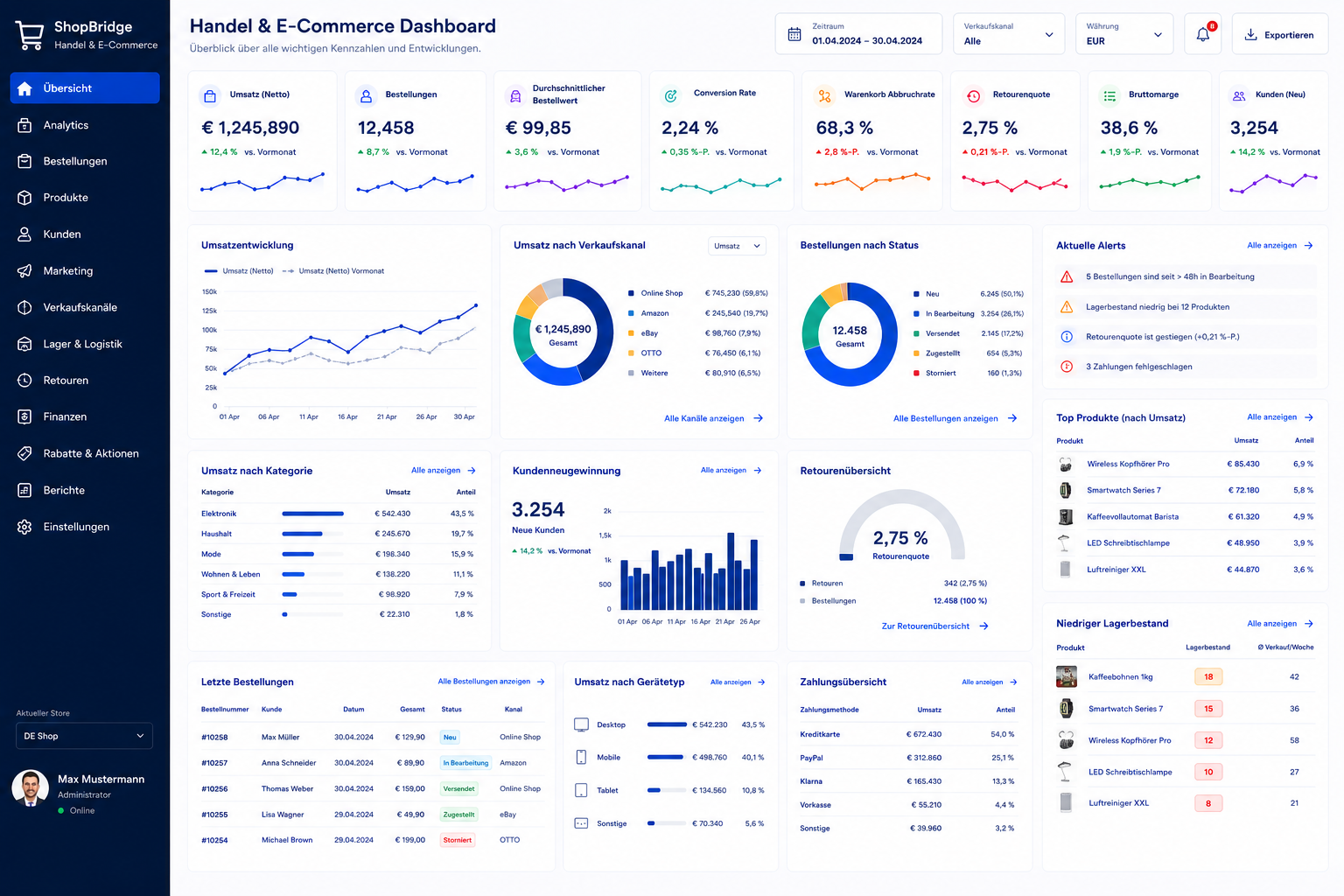
Revenue, inventory, orders, returns, channels and marketing performance — condensed in one interface, always up to date.
The AI retail dashboard condenses operational and strategic KPIs from shop, ERP, marketplaces, warehouse and marketing into one interface. Bestsellers, slow movers, return rates and early-warning indicators are surfaced automatically — without manual reporting work.
Management, purchasing, sales and marketing see at any time where the business stands — and can intervene exactly where needed.
How it works
We connect shop system, ERP, warehouse, marketplaces and other data sources — securely, locally and without data leaving your company.
KPIs, reports and early-warning rules are tailored to your assortment logic and sales channels.
We support and optimise continuously — the dashboard grows with your processes and requirements.
Use case 02
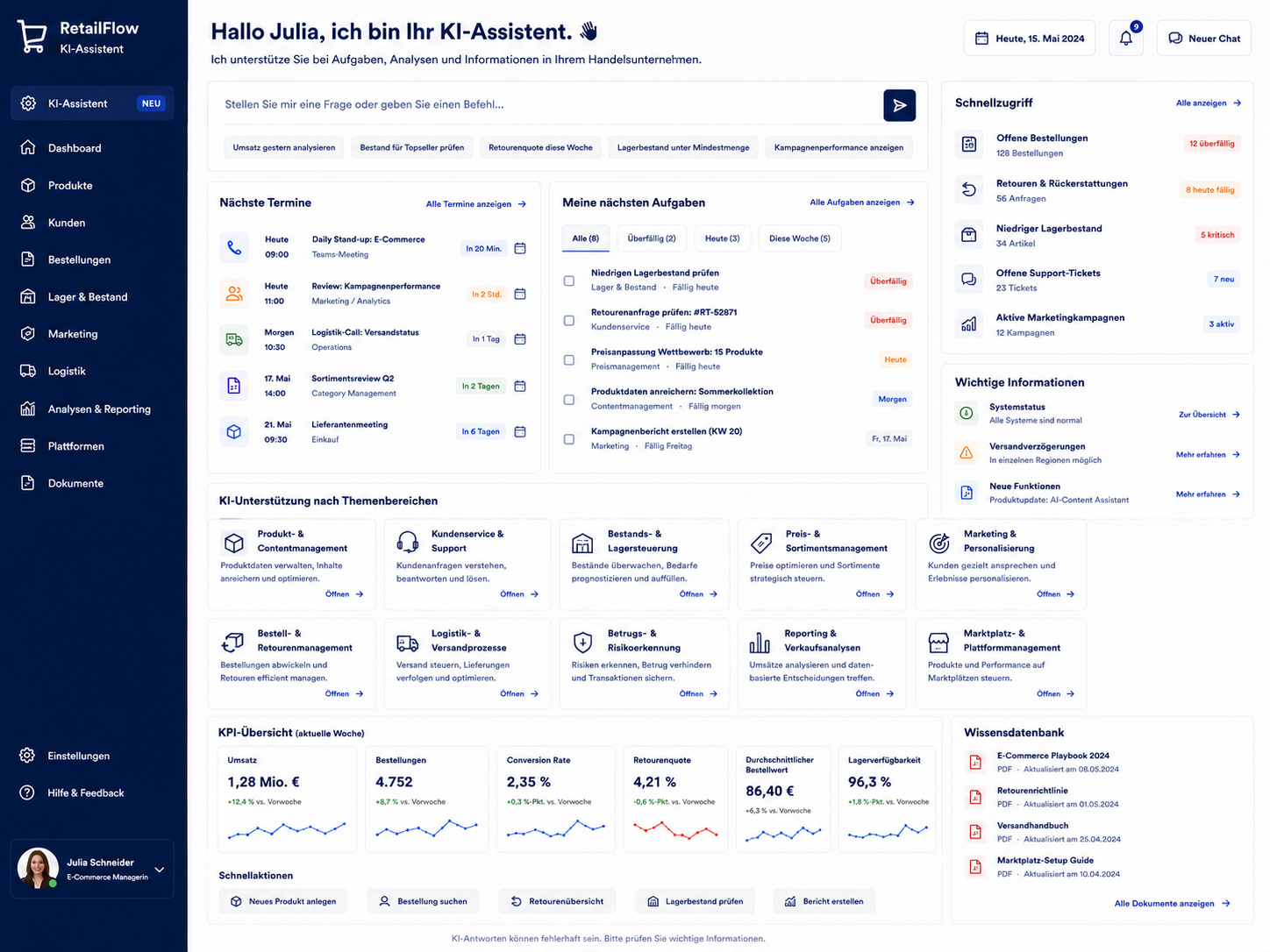
A direct contact point for assortment, inventory, orders and customer inquiries — based on your own product and sales data.
The AI assistant answers concrete questions about products, inventory, open orders, returns or customer data — context-aware and traceable, based on your shop, ERP and marketplace data.
Sales, customer service and purchasing save time on research, inquiries and preparing analyses. Complex questions are answered in natural language — with references to the underlying data and transactions.
Use case 03
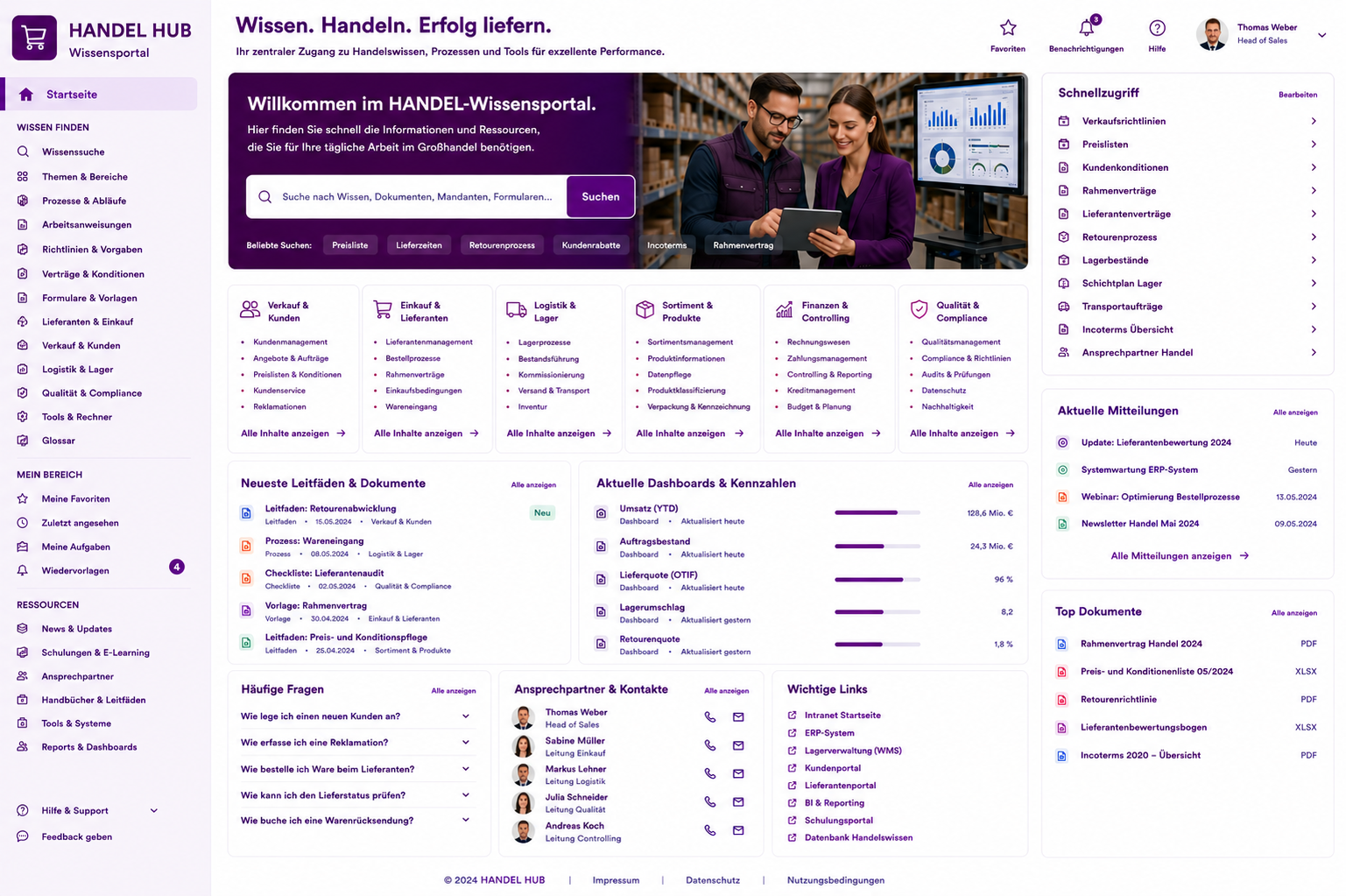
Product information, supplier documents, process descriptions, policies and experience — accessible through a single question.
The knowledge management platform provides an intelligent, central access point to all retail-relevant documents: product data sheets, supplier contracts, assortment policies, marketing briefs, internal guidelines and experience from past campaigns and seasons.
Research times drop to minutes, new employees become productive faster, and senior know-how is preserved when people leave. Knowledge becomes a shared tool for purchasing, sales, marketing and service.
Use case 04
Ten areas where AI agents relieve assortment, service, logistics and reporting and accelerate processes.
Automatically creates product copy, translations and categorisation based on existing product data.
Content can be maintained faster and provided consistently across different channels.
Answers customer inquiries automatically via chatbots or digital assistants and produces personalised responses based on existing customer data.
Support processes can be handled faster and more efficiently.
Continuously analyses sales and inventory data and produces demand forecasts and automatic replenishment suggestions.
Shortages or excess stock can be detected at an early stage.
Analyses market, sales and competitor data automatically and supports dynamic pricing strategies and assortment optimisation.
Revenue potential and trends can be detected faster.
Automatically analyses customer behaviour and produces personalised product recommendations and targeted marketing campaigns.
Campaigns can be managed and optimised more efficiently.
Processes orders and returns automatically, monitors status changes and prioritises critical cases.
Processing times and manual administrative effort can be reduced.
Continuously analyses shipping and delivery data and automatically optimises shipping processes, tracking and delivery forecasts.
Delays or inefficient workflows can be detected at an early stage.
Analyses payment and transaction data in real time and detects unusual patterns or potential fraud automatically.
Risks can be identified and reviewed faster.
Continuously analyses sales and customer data and produces KPI dashboards, trend analyses and forecasts automatically.
Developments and optimisation potential become visible faster.
Automates data maintenance, synchronisation and internal workflows between shop, ERP and marketplace systems.
Recurring administrative tasks can be handled significantly more efficiently.