Patient admission & appointment management
Coordinates appointments automatically, supports digital registration and prioritises inquiries based on defined criteria.
Waiting times can be reduced and administrative processes managed more efficiently.
Practice management, patient communication, documentation, scheduling and quality assurance — efficient, secure and GDPR-compliant.
Use case 01
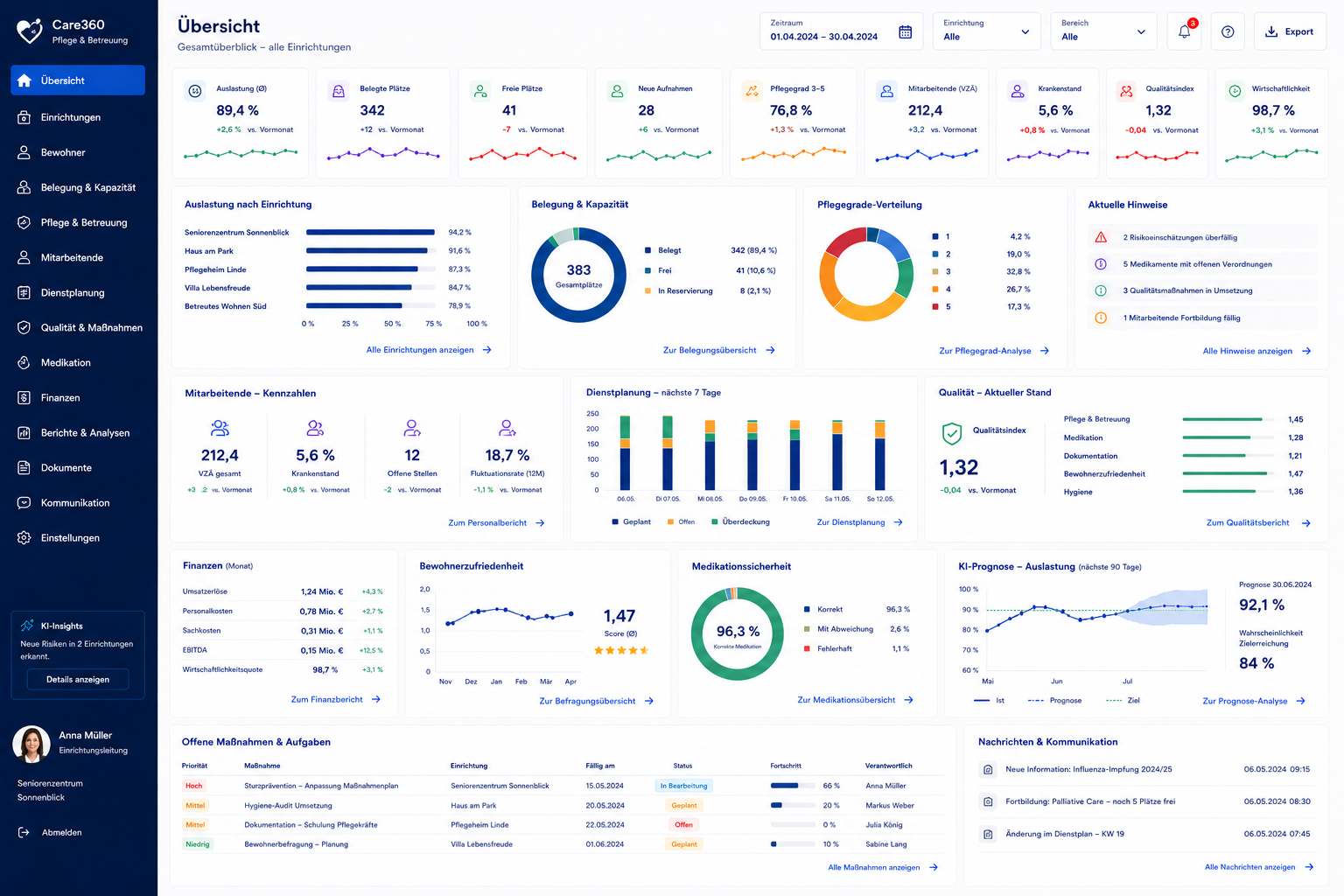
Occupancy, utilisation, appointments, waiting times, staff and compliance KPIs — condensed in one interface, always up to date.
The AI healthcare dashboard condenses operational and strategic KPIs from admission, documentation, diagnostics, nursing and administration into one interface. Occupancy, waiting times, staff utilisation and early-warning indicators are surfaced automatically — without manual reporting work.
Medical and nursing leadership as well as administration see at any time where the facility and care stand — and can intervene exactly where needed.
How it works
We connect hospital information systems, practice and care software, appointment and billing systems — securely, locally and without data leaving your facility.
KPIs, reports and early-warning rules are tailored to your care areas and documentation obligations.
We support and optimise continuously — the dashboard grows with your processes and requirements.
Use case 02
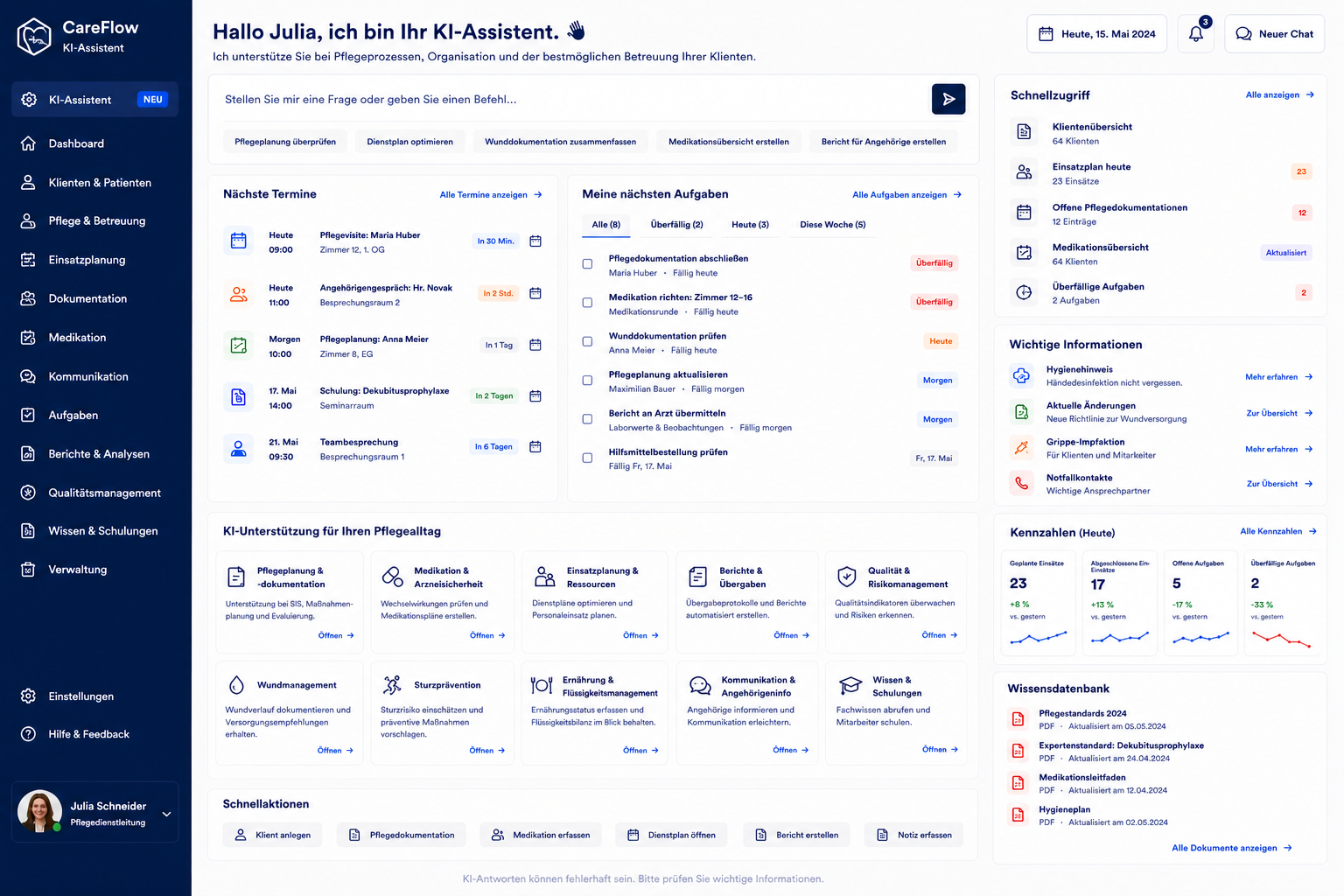
A direct contact point for patient records, findings, medication and administrative questions — based on your own data, guidelines and processes.
The AI assistant answers concrete questions about patient records, findings, therapy guidelines, medication or administrative topics — context-aware and traceable, based on your internal data, documentation and standards.
Medical and nursing staff as well as administration save time on research, inquiries and preparing rounds, handovers and analyses. Complex questions are answered in natural language — with references to the underlying documents.
Use case 03
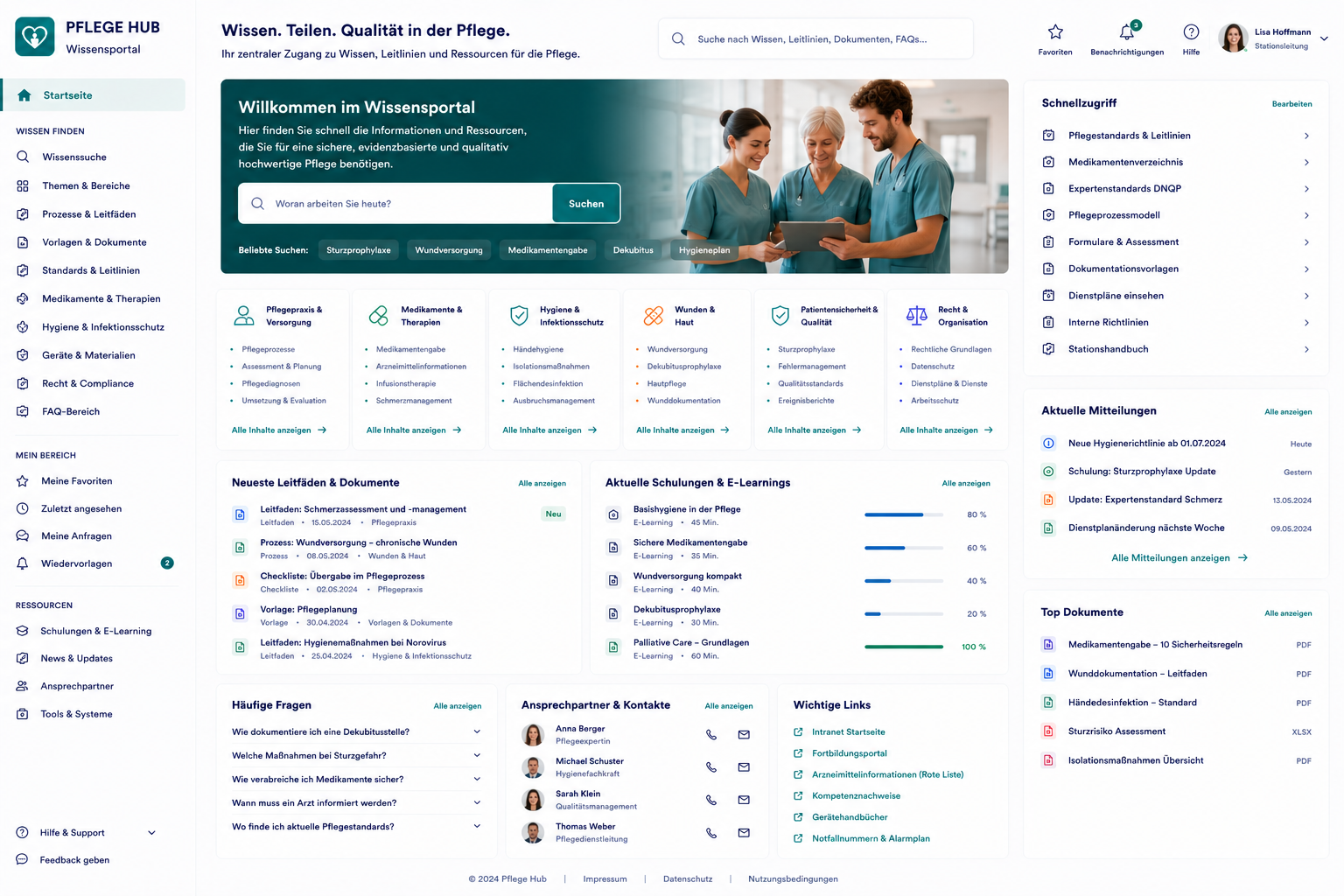
Guidelines, SOPs, hygiene and quality standards, internal instructions and experience — accessible through a single question.
The knowledge management platform provides an intelligent, central access point to all care-relevant documents: guidelines, treatment pathways, hygiene and quality standards, SOPs, internal instructions and experience from daily clinical practice.
Research times drop to minutes, new employees are onboarded faster, and senior know-how is preserved when people leave. Knowledge becomes a shared tool for all medical, nursing and administrative teams.
Use case 04
Eight areas where AI agents relieve admission, documentation, diagnostics, nursing and administration and accelerate processes.
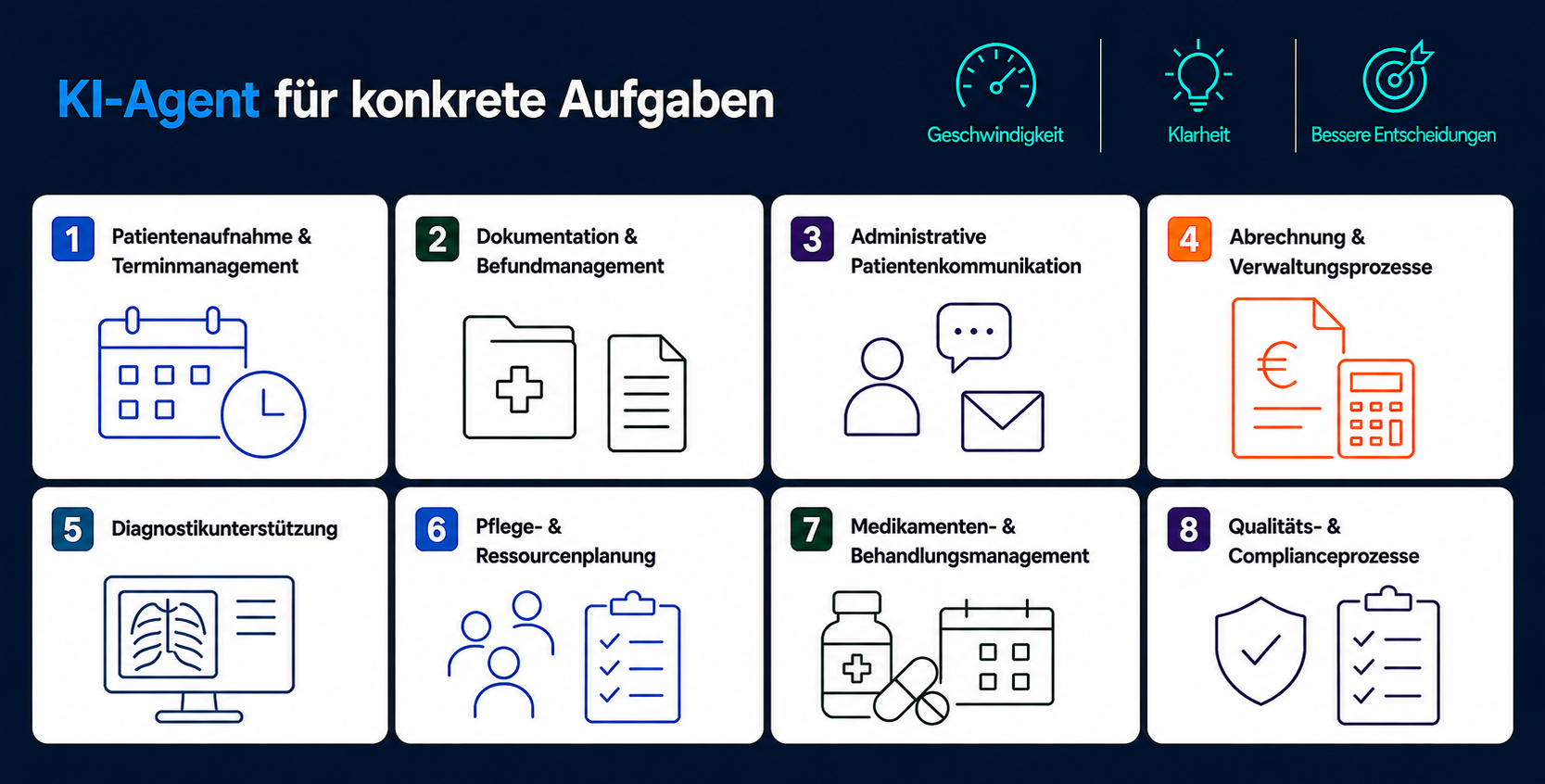
Coordinates appointments automatically, supports digital registration and prioritises inquiries based on defined criteria.
Waiting times can be reduced and administrative processes managed more efficiently.
Automatically creates records via speech recognition, analyses medical documents and structures findings for faster downstream processing.
Documentation effort is significantly reduced.
Automatically answers standard inquiries, sends reminders and supports patients via chatbots or digital assistants.
Recurring communication tasks can be handled faster.
Supports service allocation, invoice review and the automated processing of administrative documents.
Inconsistencies or missing data can be detected at an early stage.
Automatically analyses medical imaging and other diagnostic information and detects patterns or anomalies to support medical decisions.
Relevant indications can become visible faster.
Supports duty rosters, capacity management and utilisation analyses through automated data analysis and forecasting.
Bottlenecks or overload can be detected at an early stage.
Checks potential interactions, supports therapy decisions and detects risks or anomalies within medication and treatment data.
Patient safety can be increased.
Automatically analyses documentation, supports audits and checks processes for compliance with medical guidelines and regulatory requirements.
Deviations or missing evidence can be detected at an early stage.